Humanities HUB › ARCHITECTURE › History › Baroque & Rococo
BISAC ARC005050
Current paper · Semantic Scholar
NATIONAL SELF-ESTEEM AND THE COLLECTIVE FALSE SELF: PSYCHOANALYTIC REFLECTIONS ON RELIGIOUS MONUMENTALITY IN POST-COMMUNIST ROMANIAThis article examines the link between collective self-esteem and the monumentality of religious architecture, proposing that sacred buildings act as material reflections of how nations perceive their worth, destiny, and spiritual legitimacy. Across history—from Gothic cathedrals to Baroque basilicas and minimalist chapels—the scale and style of sacred spaces have mirrored a community’s psychological state: confiden…
Encyclopedia · Wikipedia
 Rococo
Rococo, less commonly Roccoco, is a Western style of architecture, art, and decoration that emerged in France in the 1730s as a reaction against the Louis XIV style. It is characterized by extensive ornamentation, fluid curves, asymmetry, and a smaller scale designed to foster intimacy. It employs rocaille (shell- and pebble-like motifs) and often blends white and pastel colours with gilding and sculpted moulding, u…
Image · Europeana
Full text · Open Library
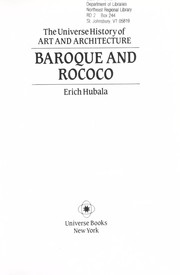 Baroque and Rococo (Universe History of Art and Architecture)
Image · DPLA
TITLE: Meissen figure group of a seated nude woman with a child
Archive — earlier papers (0)
No earlier picks on file yet.
Archive — earlier Wikidata picks (0)
No earlier picks on file yet.
Archive — earlier Wikipedia picks (0)
No earlier picks on file yet.
Archive — earlier Europeana picks (0)
No earlier picks on file yet.
Archive — earlier Open Library picks (0)
No earlier picks on file yet.
Archive — earlier DPLA picks (0)
No earlier picks on file yet.