Humanities HUB › LITERARY CRITICISM › Indigenous
This category
LITERARY CRITICISM / Indigenous
Paper · Semantic Scholar
Harmonizing Literary Criticism: How AI Can Help Resurrect the Author and Unite the Banners of Literary TheoryOver the past century, literary theory has branched out in several directions. Diverse schools of literary thought, such as Semiotics, New Criticism, Intentionalism, Structuralism, and Deconstruction, have passionately plowed new ground within the academy and just as passionately defended that territory against their neighbor’s incursions. At times, authors and their intentions have been central to literary criticis…
Reference · Wikidata
Relationally responsibly reading: an approach to Indigenous literary criticism amid Métis identity politics in Canadascholarly article published in AlterNative, vol. 21, no. 4 (2025) (DOI: 10.1177/11771801251365763)
Encyclopedia · Wikipedia
 Indigenous peoples of the Americas
The Indigenous peoples of the Americas, also called Amerindians, are the peoples who are native to the Americas or the Western Hemisphere. Their ancestors are among the pre-Columbian population of South or North America, including Central America and the Caribbean. Indigenous peoples live throughout the Americas. While often minorities in their countries, Indigenous peoples are the majority in Greenland and close to…
Book · DOAB
Indigenous Textual CulturesAs modern European empires expanded, written language was critical to articulations of imperial authority and justifications of conquest. For imperial administrators and thinkers, the non-literacy of “native” societies demonstrated their primitiveness and inability to change. Yet as the contributors to Indigenous Textual Cultures make clear through cases from the Pacific Islands, Australasia, North America, and Afri…
Full text · Open Library
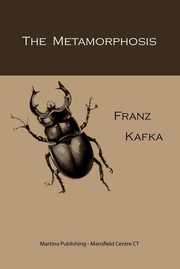 Metamorphosis
Metamorphosis (German: Die Verwandlung) is a novella written by Franz Kafka which was first published in 1915. One of Kafka's best-known works, Metamorphosis tells the story of salesman Gregor Samsa, who wakes one morning to find himself inexplicably transformed into a huge insect (German: ungeheueres Ungeziefer, lit. "monstrous vermin") and subsequently struggles to adjust to this new condition. The novella has bee…
Image · DPLA
Issue 64.1 of the Review for Religious, 2005.