Humanities HUB › POLITICAL SCIENCE › Indigenous
This category
POLITICAL SCIENCE / Indigenous
Paper · Semantic Scholar
The Social State Governed by the Rule of Law (Estado Social de Derecho): Limitations on the Fundamental Right to Indigenous EthnoeducationThe 1991 Political Constitution of Colombia established the Social State Governed by the Rule of Law (Estado Social de Derecho) as a new model of political, legal, and administrative organization, introducing into the Colombian legal system the right of Indigenous peoples to ethnoeducation and to own education (educación propia). Objective: To analyze how the Constitution, its implementing legal provisions, and the …
Reference · Wikidata
Daniel Vothprofessor of political science and indigenous studies scholar
Book · DOAB
Survey Analysis for Indigenous Policy in Australia: Social Sciences Perspectives (CAEPR Monograph 32)Indigenous policy is a complex domain motivated by a range of social, cultural, political and economic issues. The Council of Australian Governments ‘closing
Full text · Open Library
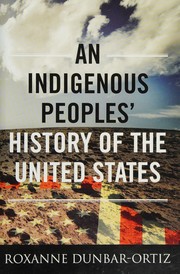 An Indigenous Peoples' History of the United States
Today in the United States, there are more than five hundred federally recognized Indigenous nations comprising nearly three million people, descendants of the fifteen million Native people who once inhabited this land. The centuries-long genocidal program of the US settler-colonial regimen has largely been omitted from history. Now, for the first time, acclaimed historian and activist Roxanne Dunbar-Ortiz offers a …
Image · DPLA
In 2008 and 2009 the indigenous peoples from the Peruvian Amazon staged massive protests in opposition to President Alan Garcia's development policies, many of which were designed to facilitate the exploitation and development of natural resources on indigenous territorial spaces. Tragically, the protests ended on June 5 (2009) in the Amazonian province of Bagua, where, according to official reports, ten protesters …
Subcategories