Review of Literature
Conceptual and Technical Definitions
In the beginning and in the end the only decent definition is tautology: man is man, woman, woman and tree tree (MacNiece 1938).
Definitions are like belts. The shorter they are, the more elastic they need to be. A short belt reveals nothing about its wearer: by stretching, it can be made to fit almost anybody. And a short definition, applied to a heterogeneous set of examples, has to be expanded and contracted, qualified and reinterpreted, before it will fit every case. Yet the hope of hitting on some definition which is at one and the same time satisfactory and brief dies hard: much can be learned by seeing how much elasticity is ultimately required of such portmanteau definitions (Toulmin 1961).
Research of any reasonable length will inevitably introduce a pantheon of jargon and specialist terms that have the potential to be impenetrable to all but the most determined reader. This work attempts to avoid veiling itself with any barrier of this sort, however, as the subject material crosses disciplinary boundaries and discusses specific technologies specialist terminology must be introduced. The intention of the opening section is to systematically map the terms and definitions that inform the review of existing literature later in this chapter and the discussion of subsequent chapters. Each of the concepts presented here is utilised with specific meaning in this work that requires explanation and justification.
The ‘Virtual’
This work purposefully quotes the use of the term, ‘virtual’ in order to highlight its somewhat arbitrary application and definition across the existing literature. One of the key points of difference between this work and existing literature is that this work avoids the classificatory dichotomy that is often implied in the use of the term, the ‘virtual’. The binary opposite with which the ‘virtual’ is paired varies from author to author (Siering 1995; Wellman 2001, 40; Liff et al 2002, 97;). Furthermore the basis and rationale for the distinction shifts historically in the literature regarding cyberspace and information technology. One of the most common pairings is that of ‘reality’ and the ‘virtual’ (cf. Porter 1997, xii). This dichotomy - considering the vast bulk of literature concerning the social construction of reality (Berger & Luckmann 1966; Arbib & Hesse 1986) which considers the tenuous and arbitrary basis for ‘reality’ - clarifies little. Other authors, who are perhaps more conscious of relevant philosophical discussion, utilise opposites such as ‘actuality’ (Deleuze 1994, 183; Foucault 1997 227), ‘physicality’ (Ito 1997, 88; Fisher 1997, 121) or corporeality (Argyle & Shield 1996, 58). Despite this sophistication, the core premise of many of these works is that a distinction exists between these two locales of cultural practice solely because of the presence, or absence, of particular physical qualities. Few authors who examine and discuss the phenomena of the ‘virtual’, critically analyse the basis for this distinction (Miller & Slater 2000, 4). These discussions of the ‘virtual’ also tend to ignore broader discussions found in sociology and cultural studies (Oldenzeil 1996, 61) that consider it within the increasingly commodified and consumption orientation of contemporary Western cultures. Also they often ignore, the enculturation (or, more simply, training) that individuals in these cultures have already had in the ‘virtual’ through mediums such as television, radio and films which provides them with a preexistent level of skill and comprehension (Vasseleu 1997, 46).
The other thread of definition for the ‘virtual’ that has increasingly emerged with the increasing popularity of the World Wide Web and the Internet is as a synonym to these spaces of cultural activity (Wellman 2001; Agre 2002; Fraim 2002). This understanding of ‘virtual’ coincides closely to the rise in the Web’s popularity but it also captures a more specific meaning that is not so heavily tied to a binary opposite as it is to a specific locale. The Web is ‘virtual’ and the ‘virtual’ is primarily the Web in these interpretations. The use of ‘virtual’ as a technical label helps to promote the World Wide Web and the Internet to a heightened level of importance within contemporary cultural practice. The virtual-as-web perspective de-emphasises, to a degree, the relevance of the ‘virtual’ as something not physical and promotes the ‘virtual’ more simply as another space for the conduct of cultural activities that are also enacted elsewhere (Tomas 1991, 31; Tyler 2002, 204). The continuity of cultural practices between different spaces is then accentuated over their disruption and differences. This thesis largely adopts this second perspective in its use of the term, ‘virtual’, to suggest the presence of a different locale of cultural practice but one that is heavily linked to existing and previous social constructions and cultural meanings. The use of this term is not, however, intended to imply that the Web is the only possible space for experiencing the ‘virtual’ (Ostwald 1997), other space in different contexts may also be considered ‘virtual’. However this work confines itself to understanding the Web as ‘virtual’ space.
The Web
The web of our life is of a mingled yarn, good and ill together. (Shakespeare. First Lord, All’s Well That Ends Well, act 4, sc. 3)
A range of writers have conceptualised the Internet in many ways. It has been described, for example, as an abnormal media institution (Buick & Jevtic 1995, 8), an anarchistic and anachronistic offshoot of various sixties movements (Rushkoff 1994, 18-19) or a knowable and comprehensible information system (Rheingold 1995, 44-47). All of these perspectives have validity and co-exist relatively comfortably. Costigan (1999, xvii) takes a more nihilistic approach by claiming that “I am not sure that I know what the Internet is; I am not sure anyone does.” Defining the Web as the context of this thesis rather than the more obtuse concept ‘cyberspace’ avoids a range of definitional problems. Chatterjee (2001, 80), for instance, champions the term, ‘cyberspace’, for its ability to resist singular interpretation or definition. Miller & Slater’s (2000, 14) observation of Internet users reveals a still more subjectivist position. “What we were observing was not so much people’s use of ‘the Internet’ but rather how they assembled various technical possibilities that add up to their Internet.”
As a specific aspect of the Internet – one of its many services - the Web is an increasingly familiar term in both academic and popular literature (Bukatman 1995; Nunes 1995; Costigan 1999; Dartnell 1999; Dean 1999; Mitra 1999; Fraim 2002; Tyler 2002). The term itself, in contrast to the range of definitions of the Internet, is generally used relatively unambiguously and meaningfully without explanation. The assumption that the ‘Web’ is automatically meaningful is perpetuated, to a degree, in the previous section - 2.1.1. What is meant by this term coalesces together a combination of technical terms that literally underlie and remain intentionally largely hidden from its popular experience and cultural practice. As a descriptive term in itself, the Web is more than the sum of these ‘technical’ components. However, it is in and from this combination of technologies that the Web becomes the focus for social science research (Sudweeks & Simoff 1999, 31). A consequence of this position and of the focus of this work is that there is no need to directly examine the technology behind the many individual elements represented by the ‘Web’, however, it is advantageous to an understanding of the different interpretations and discussions of it in the existing literature to see how these elements relate to one another. Examination of the technical background to the Web also assists in clarifying why such confusion exists in relation to the use of this term.
The World Wide Web can simplistically be conceptualised as being on the outer surface of an onion. It is supported of a series of layers that in combination produce the experience we commonly understand as the Web (Sobell 1985, 13, Dr K 2000, 53). While ‘our’ experience is conducted on the outer layer of this onion, the various underlying layers provide essential support for this experience. These layers also represent a stratigraphy of technological developments that was first actualised in terms of computing technology in the early 1970s (Sobell 1985, 7). At the core of this onion is the physical network of interlinked but geographically separate computers. This network of computers first developed between universities in the United States in the 1970s with Department of Defense funds (Jonscher 1999, 158). The capability for internetworking of computers over long distances was initially enabled through the Unix operating system and the range of modular and systematic technical solutions that it encouraged. Many of these solutions still form the basis for commonly used technologies including email, password based authentication and remote access to computers. Above the physical layer is the set of standard protocols embedded within modern operating systems that enable the networks to actually connect to one another in a consistent and reliable way. Of the many protocols that have been developed for computer networking, the Transmission Control Protocol (TCP) and the Internet Protocol (IP), forms the basis for the majority of Internet based services including the Web (King, Grinter & Pickering 1997, 17). The pairing of these two protocols acts as a type of simple post office system. The protocols are responsible for packaging up the network data and sending it to the right address. Many of the crimes associated with networked computers are conducted at this level (Dr K 2000, 159). Hackers manipulate the stream of data packaged up by TCP/IP to gather information related to specific computing installations and software configurations.
Many popular publications, and even academic works, often blur the meaning of the Internet and the World Wide Web together, treating the two as synonymous (Gottlieb & Jacobs 2002, 120; Reynders & Wright 2003, 193). However, the World Wide Web is ‘merely’ one of the many services that the Internet facilitates. It is important to make this distinction and to clarify this difference in the context of this work as it is possible that the World Wide Web may eventually become less popular and be substituted by another Internet-based service. The claimed need for a “new Web” is made by software engineers and computer scientists often to be greeted by an outraged public who fail to distinguish between the Internet and the Web (Pastore 2001). The most recent example of this popular confusion has been the EU (and others) impetus to create networks of inter-linked computationally powerful computers into what is described as the Grid and the Semantic Web. The Semantic Web has been described as the second Web (Ewatt 2002; Port 2002) although its primary purpose is to support the manipulation and analysis of academic qualitative research data. “SuperWebs” and other similar descriptions have received popular media attention with articles such as “Lock onto the Grid” (Piven 2000) implying that this research infrastructure is intended for, or already has, general consumer utility. The precedent for the shifting popularity and importance of individual Internet-based services already exists. One of the former services that was popular on (top of) the Internet prior to the Web was a service developed at the University of Minnesota called Gopher, a weak pun meaning ‘Go fer it’ (Krol 1994). The service was used extensively by library services, universities and government departments through the late 1980s and early 1990s with varying degrees of success. However, Gopher services rapidly disappeared after the Web’s development and standardization. The fact that Gopher is now relatively unknown is a result of the two services offering similar advantages. But whereas Gopher systems required complex configuration and were solely text-based the Web offered a relatively simple document format and the ready inclusion of graphics and colours. In this light, the warnings of computer scientists regarding the long-term popularity of any single Internet service are more understandable: new Internet services will come and individual Internet services have gone. What the computer scientists, and others, who make these predictions ignore, however, are the significant levels of financial investment that have been made by large corporations and other institutions into the development and maintenance of their Web sites (Reifer 2002). The financial commitment by large commerical organisations and national governments alone ensure longevity for the Web that extends beyond any indeterminate and solely technical ‘use by’ date.
As a service of the Internet, the Web is a specific combination of storage locations and software that are accessible through the mechanisms - and the technology - of the Internet. Individual Web sites are not interlinked in any technical sense nor do the individual elements of a Web site have to be linked or associated with each other in any particular way. The absence of a co-ordinated structure is the technical ‘anarchy’ of the Web that writers such as Rheingold have represented as a social anarchy (Davis 1999, 38; Seger 2002, 101). The complete absence of any formal hierarchy or relationship is, however, one of the reasons for the popularity of individual Web projects, such as those found on the geocities.com or tripod.com Web sites, where ‘anyone’ is capable of becoming a Web author and publisher. There is no policing of the Web at this technical level, how a Web site is composed, or what it is composed of, is not directly restricted by the technology of the network itself. The relative ease that a Web site can be set up is best reflected by some of the recent releases of operating systems including Windows, Linux and the Macintosh OS. With the increased popularity of the Web, operating system developers have included the ability for an individual to create their own Web site on their own personal computer. In the case of Microsoft Windows XP ‘publishing to the Web’ may be not much more than a single click away. In these situations, becoming a ‘publisher’ is automatic and requires no technical knowledge. The result is that the owners of these machines often had (or have) a Web site accessible to anyone with Internet access offering up personal and sensitive documents without the owner’s own knowledge (cf. GeekNews 2002). The danger of unwittingly revealing personal information is still a major security risk on many personal computers.
The final layer to the metaphorical onion is the software that enables access to the Web - the Web browser. The difference between the software and the Web itself is yet another source of confusion. The different class of technologies that are represented by a browser or the Web are often conflated together for ease of explanation to less technically capable computer users. The lack of precision in the identification of technology is perhaps the basis for the urban myth regarding the user who calls a help desk and says, “I think I just deleted the Internet.” The patient technician’s cynical response is, “That’s OK, we have it backed on tape here somewhere.” (rinkworks.com/stupid/cs_revenge.shtml). The conflation of browser and system is arguably one point of contention in the recently concluded anti-trust case against Microsoft, the producer of the most popular Web browser, Internet Explorer. The case claimed that Microsoft acted unfairly and took advantage of their predominant position as a supplier of operating systems to the personal computer market by integrating a Web browser into the core installation of their premier product (www.findlaw.com/01topics/01antitrust/microsoft.html). Integration of distinct technologies offered advantages, it was claimed by the US Department of Justice, which contributed to Microsoft overtaking in popularity its browser software rival, Netscape, and effectively prevented other developers from gaining broader support for their own browsers. The legal argument has taken a further twist that reflects the important influence of large corporations on software distribution and usage as well as the increasingly strong intersection between global capitalism and software development. AOL-Time Warner, the company that bought the Netscape Corporation, continued distributing Microsoft’s Internet Explorer with their promotional disks for their Internet Service Provider (ISP) business rather than their own AOL or Netscape browsers (ComputerGram International 1998). However, AOL has since been reported as having moved to the open source mozilla engine (now badged as Firefox) originally developed from the Netscape product (Mook 2002).
While Microsoft was found guilty in the anti-trust case, the implication of the integration of operating system and Web browser (and AOL’s subsequent adoption of the software) is even more significant in a cultural sense. Software is not culturally neutral (Greenhill et al 2000) and the significant dominance of the Internet Explorer browser shapes how the Web is perceived. Browsers manipulate and render the material retrieved off Web servers in particular ways that is not determined by the Web site. The way we see the Web then is shaped, perhaps imperceptibly, by the browser we use and by the cultural biases of the developers of that browser - including, ultimately, the hegemonic owners of the software companies. It should be noted that the impact of open source – and non-commercial – software development in this context is significant (Raymond 2001). While a person visiting a Web site is generally willingly, and knowingly, exposing themselves to the influences and biases of a Web site developer this exchange is also being mediated by the unseen influences of their own browser. The cultural influence of software may be claimed to be neutral but recent releases of the Internet Explorer software, as well as other browsers such as mozilla and Opera, reveal the extent to which this influence can extend. New Internet Explorer releases offer the capacity to link any word on a Web site irrespective of whether the user of the browser or the developer of the particular Web site wants this to happen. The “Smart Tag” system is intended for a collaborative environment and is based on the grammar and spelling tags that are used in all new versions of Microsoft Word but its potential includes the possibility that businesses could bid on “Smart Tag” links in a manner reminiscent of pay-for-placement search engines (Mitchell 2001). Microsoft’s tagging technology has to be actively turned off by the developer or by the user of the browser. Other more innocuous examples can be found in the predefined list of ‘hot’ websites and buttons that are present on a Web browser when they are first installed or in the customised toolbars that can be downloaded as addons to Internet Explorer or extensions in Firefox. Similarly ‘ISP free disks’ [Internet Service Provider] supplied on the cover of computing magazines often configure a user’s Internet access and the look and feel of their already installed version of Internet Explorer.
The ‘Web’ is used specifically in this work to mean the combination of software, including the Web browser, and storage devices that the user of the browser access Web pages from. The term encapsulates the loaded set of cultural conditions that mediate the transaction from Web site to the user of a Web browser. It also assumes the pre-existence and relative permanence of the various underlying ‘layers’ of the ‘onion’ that are necessary to enable what we understand – and see - as the Web.
The Artefact
Culture relates to objects and is a phenomenon of the world; entertainment relates to people and is a phenomenon of life (Arendt 1993).
The artefact is an implicit focus of this research. Understanding the use of the Web within the framework of exchange practices, the presentation of a desired and sought after cultural complex assumes the presence of artefacts that are distinct from immediate human existence.
‘Artefact’ is used interchangeably in various literature with terms such as ‘things’, ‘items’, ‘objects’ or sometimes ‘tools’ (e.g. Miller 1991, 85; Buchli 1997; Miller 1998; Aunger n.d., 0724.020). The usage tends to be determined by the discipline or by the stated purpose of each individual writer. However, the core meanings attached to artefacts by each author are relatively consistent, the artefact has meaning because humans define it as having meaning (Shanks & Hodder 1997, 17). Narrower and usually older definitions tend to emphasise manufacture by humans as the predominant rationale for the definition of artefacts - as artefacts (Ingold 2000, 199). The presentation of artefacts as items of human manufacture reflects the historical parallels that material culture studies has had with archaeological practice particularly in the US context (Buchli 2002). A narrow definition such as this itself offers up some interesting artefacts for discussion to the potential chagrin of more traditionalist archaeologists whose understanding of artefacts tends to be tied to ‘things’ found in a prehistoric provenance. However, in contrast to this view, contemporary artefacts include a wider ranging set of possibilities that extend beyond an archaeological provenance. For examples, the centuries old practice of selective breeding has produced an enormously varied but inter-related set of artefacts in the form of domestic dogs, livestock and flowers, which are all consequences of human manufacture and intention and are separate from immediate experience (Hodder 1995, 75).
The fashion industry annually produces a varied range of artefacts that have meaning and inherently reference, either positively or negatively, contemporary cultural practices (Baudrillard 1993a, 93; Dant 1999, 86). The advent of the ‘modern primitive’ and the influences of the urgent dynamism of the fashion industry have also contributed to the increased awareness of the manufacture of the human body as artefacts (Larratt 2003; Perlingieri 2003). The understanding of bodies as artefacts is well recognised within the literature of studies of gender discourses (Rodaway 1994, 31; Fruhstuck 2000) but clearly extends the original intention of archaeologists in their study of prehistoric arefactual remains.
The understanding of the artefact as a product of human definition also extends the possibilities for artefactual examination of cultural phenomena. Permanent geographical references such as mountains or waterfalls used in traditional stories and as wayfinders are both examples of the ways that natural phenomena can also be considered artefacts (Graham 2000 109; Harvey et al 2001 14). These sites are artefactual because of the human ascription and meanings placed on an identifiable and permanent part of the landscape. These places also remain geological but it is their use by humans that ascertains their roles within cultural practices.
The rising significance of tourism and global capitalism to national economies increasingly produces ‘in-between’ artefacts in which the negotiations between use and manufacture are conducted across cultures (Urry 1990, 13; Hooper-Greenhill 2001, 57 & 92 & 106).
The important themes from Material Culture studies literature and other disciplines that pursue an understanding of artefacts is the fact that artefacts have a cultural meaning that is attributable to them beyond that of immediate interpersonal social relations. “Things do not exist without being full of people, and the more modern and complicated they are, the more people swarm through them.” (Latour 2000, 10). Artefacts stand as proxies to immediate human experience (Richardson 1974, 4). As an aspect of cultural practice and everyday life the meaning of artefacts is also consequently fluid and dynamic (Pearson 1997; Bloch 1997). An important link between the theorising of the artefact and contemporary information and communications technology can be found within current trends in software engineering. Software engineering has been influenced for the past fifteen years by what is described as ‘Object Oriented Programming’ (Doke, Satzinger & Williams 2002, 3-4). The central argument made for object orientation is that in developing software that is composed by the collecting together of objects the process becomes more intuitive and reflective of ‘natural’ or real life practices (Doke, Satzinger & Williams 2002, 14). Object orientation focuses on the idea that ‘objects’ are a collection of data - the information being stored - and methods - the ways in which that the data can be manipulated. Different objects store different data and ‘do’ different things. In software engineering this is described as encapsulation. In other words, the object contains, hidden from direct view, a particular combination of data and methods. The design philosophy of these techniques also centres on two other qualities that objects can possess. Objects can ‘inherit’ particular qualities from more generalised and abstract objects. A common example is that of a generalised class of object called an aeroplane that incorporates wings and the capability of flight. Individual classes of aeroplanes inherit the general features of the aeroplane class as well as their own specific features. For example, a passenger plane might feature a bar and in-flight movies whereas a crop-duster includes large storage tanks and DDT. Similarly, and in contrast to inheritance, the concept of abstraction offers a big picture view of the problem the software engineer is trying to solve. Abstraction allows design to proceed from the ‘big picture’ and the most general qualities of an object. Consequently, it is possible to look at a crop-duster and a passenger plane and understand that both are members of a common class of aeroplanes.
While this is a simplified description of object oriented design methodology it does provide a generalisation of the way that artefacts can be understood albeit in a somewhat systematic and functionalist way. Although the objects designed and created by software engineers do not possess any ‘real life’ qualities they are artefacts in the same sense that a spear, a piece of pottery or a statue can be understood. The object-oriented inspired theorisation and understanding clearly leads to a possibility for systematic material culture treatments of software and other artefacts that do not have a direct physical form. Artefacts, such as software, search engine robots and web pages, possess the definitional qualities of an artefact in that they are separate from immediate human communication and act as a proxy to direct human action while lacking any prerequisite physical qualities. Recognising and defining the “virtual” artefact reflects this work’s earlier rejection of the certain dichotomy of ‘virtual’ and physical as an essential point of analytical difference. The emphasis in this newly presented definition is upon the manner in which the artefacts relate and interact with cultural practice broadly rather than having a specific physical quality that imparts them with ‘thingness’. The separation of artefacts from direct human action and the ability of an artefact to persist without immediate human presence are also recognised by this definition, this does not, however, directly require these qualities to be imparted as a consequence of a physical presence.
Cultural Complex
The term ‘cultural complex’ is used throughout this work with the same meanings and intentions that are employed by archaeologists. A cultural complex is a collection of artefactual remains and cultural traits (Bahn 1992, 110). For the archaeologists, traits are interpreted from the artefactual evidence of many similar finds located in a similar provenance with a similar complex relationship other artefacts. Contemporary work has access to a variety of materials including popular media that cross-reference, correlate and confirm the existence of common traits. In archaeology the complex is often implied as being equivalent to a single culture. In a prehistoric and archaeological context, the artefacts of the cultural complex are the only direct evidence available to archaeologists regarding that culture. From these artefacts the archaeologist attempts to reassemble an understanding of the culture and its key traits (Latour 2000, 11). In European prehistory the Mousterian, Aurignacian, Magdalenian and Acheulian cultural complexes are represented as being synonymous with the peoples and cultures that made and utilised these artefacts (Kuhn 1995, 8). Subsequent literate and historical cultures are also closely associated with specific artefacts. ‘Classical’ Roman and Greek cultures are similarly largely understood and represented by the artefactual evidence that remains for interpretation. The artefactual understanding of ancient cultures is supported by additional evidence in the form of contemporaneous literature for the cultural traits of these peoples.
The term ‘assemblage’ is also used by archaeologists to label groups of artefacts that have been discovered together (Bahn 1992, 34). The systematic grouping of related artefacts reveals more about a culture than a single item because of the additional context provided by the grouping together of artefacts. Assemblages offer opportunities for interpretations regarding all aspects of the cultural meaning of found artefacts. A contemporary Web-based example of an assemblage is provided by the weekly lists of popular search terms offered by Google and Lycos. An assemblage based approach to interpretation is utilised in Section 5.3 of this work with the cultural analysis of the collected data. Considered together, the classes of terms show a variety of interrelationships and associations that cannot be revealed when each term or class of terms is considered in isolation. The gathered assemblage assists in the identification of predominant traits within the mainstream western cultural complex.
Museology also places heavy emphasis upon the relationship between artefacts and culture (Hooper-Greenhill 1992, 7). As with the archaeologist, the museologist makes interpretations and gains understanding of a culture through the artefacts under examination. The traits of a culture, its cultural exchange networks, inter-cultural communication, lifestyle practices and social organisation are all inferred from the examination of associated artefacts in conjunction with the use of ethnographic work. The ability to infer aspects of a people’s socio-cultural life world from their artefacts is possible because the artefacts themselves are embedded and integral aspects of everyday life or at least the practices of the possessing and creating culture(s). Museology, especially, emphasises this everyday life relationship of artefacts with cultural practice through collections of cooking and storage vessels, funerary items and building items. A change in the everyday life of the people of that culture alters their relationship to the artefacts that surround them. In turn, changes in the immediately accessible artefacts of a culture impact upon the experiences of everyday life (Miller 1998a). The most blatant and destructive example of this material influence upon everyday life can be discerned in inter-cultural contact situations. The importance of guns and horses among First Nations peoples are citable examples (Hope 1990; Whitfield 2003; Brand 2004, 45) of the impact of material culture upon cultural practices and relationships. The impact of these influences was so pervasive that colonial settlers of North America believed that the horse was native to the continent and an historical aspect of these cultures. The situation of the horse in North America is evidence of how a new artefact introduced to a culture in isolation and at a distance from colonial - or mainstream - power can still embody and convey some of the cultural power of the invaders to the ultimate detriment of the culture receiving it. Mintz’s (1995) anthropological discussion of sugar ascribes a similar impact to this foodstuff/artefact. The impact of these ‘things’ is the enactment of a cultural hegemony that reveals the ability of artefacts to act as proxies to direct human action (Michaels 1996).
Taxonomy
Inanimate objects are classified scientifically into three major categories—those that don’t work, those that break down and those that get lost (Baker 1968).
Taxonomic analysis is found primarily within the study of material culture as a means for interpreting archaeologically recovered artefacts (Brew 1946; Hodder 1995, 102). The taxonomy is an ordering principle in which ‘important’ features are used to group together those artefacts that are alike and distinguish them from those that are not. Taxonomies have been used successfully for almost any conceivable collection of archaeological artefacts and often act as a reference point for classifying and comparing other artefacts that are subsequently located within a similar provenance.
Taxonomies, however, are not restricted to strictly academic works or usage nor are they solely applied for conceptual ruminations. Taxonomies are essential to most library services and provide a sufficiently simple and practical method for patrons to locate a specific item from large collections of material. Similarly, software engineers take advantage of a taxonomic approach to manage and locate the correct object for use in the development of software - through the use of ‘packages’ of related classes. However, probably the most famous scientific taxonomy is that composed by Linneaus in 1758 to categorise the world’s flora and fauna (Brands 2000). The strength of this taxonomy as an ordering principle - despite subsequent additions and revisions - can be found in the fact that it is still the primary means of classification for both botanists and zoologists. Classification is part of the modernist project (Mourad 1997, 35; Gergen 2000, 87) to accumulate and structure all received human knowledge.
The other significant work of taxonomy, in the form of folk taxonomy, which is of particular importance to this research is that of Lévi Strauss. Lévi Strauss’s (1966, 35) taxonomic approach to interpreting tribal cultural arrangements provides the impetus for the theoretical position of structuralism and for works that inspect a range of cultural situations through a similar theoretical lens. Lévi Strauss claimed that social organisations and arrangements followed a structured grammar that ordered relationships and defined oppositions. There is a tendency for the structures (and structuralism) implied from observed phenomena to be interpreted as overly static and reductionist - a direction that this thesis seeks to avoid. However, despite this criticism Lévi-Strauss’s structuralist contribution does identify a cultural basis for the individual choices that people make in their everyday lives that do not necessitate a directly functional explanation. These choices include, in the context of this thesis, the search terms that people choose to use on Web search engines.
Taxonomies are not, however, an ultimate solution. They are usually composed with a clear cultural bias and with specific emphasis (Geertz 1993, 11). An example of this bias can be found in the taxonomy created by the Library of Congress to order its collection. The militaristic bias of the collection, and its guardians, results in an entire section - representing 10% of the total available codes in the system - being occupied by military matters. The more commonly used Dewey Decimal Scheme that was developed in the 19th century offers a particular set of historical biases too. Ten percent of the scheme is dedicated to classifying religion. In the 10% of the scheme dedicated to languages, 70% of the scheme is dedicated to European languages and only the remaining 30% is available to what are labeled ‘other’ languages. Most informed observers can locate other similar discrepancies. In some cases these biases are so apparent that technical librarians must apply creative solutions to enlarge sections of the classificatory system to satisfy their own collection’s specialty. Woolley (1992, 179) describes the Dewey decimal system as
one of the greatest monuments of modernity, with its heroic attempt to order the sum of knowledge with a neat numbering system - is already stretched to breaking point, having to accommodate subjects that were never anticipated when it was first devised. The system has been unable to find a number that fits ‘theory’.
This is not a fatal criticism of the taxonomies used in libraries but rather reflects how issues of practical library management intersect with what is a conceptual ordering of human knowledge and experience. Librarians need to classify individual items with the intention of creating a shelving order in order to facilitate the ready location of any single item in the collection. The impetus for library classification, then, is to isolate items uniquely rather than to cluster items together (www.udc-online.com/intro.html).
The examples of taxonomic analysis on more specific sets of artefacts are still more encouraging in their application to research of culture and material culture. The work of Lauer (1974) on the pottery of the d’Entrecasteaux Islands, for example, is still an important reference for the analysis and classification of pottery collected from the Kula region. Taxonomy - in itself - has limitations, however, in its capacity to offer any details on the use or meaning of any given individual piece between their manufacture and their final collection. In some cases, for example in the examination of individual pots for extraneous material such as the singes of a fire or the residue of fibres and foodstuffs provides this additional information. Interpretation of these qualities must be conducted from outside the boundaries of most formal taxonomies. It is a curiosity of taxonomies that while they do not describe any single artefact in detail they provide a generalised representation of the individual items within the taxonomy. So while a taxonomy cannot definitely identify whether a specific artefact is a cooking pot it can suggest the range of an artefact’s connections with other artefacts that have been ascertained to be cooking pots. Taxonomy - in this way - is itself a culturally specific tool of association and comparison for, it should be stressed, the classifying culture (Miller 1991, 116; Hooper-Greenhill 1995, 5-6;). Ultimately, taxonomies are highly crafted artefacts in their own right.
The classification of individual pieces also presents multiple choices within a single taxonomy (Preston 2000, 22). An example from the Trobriand Islands is found in the development of the shape of lime spatulas. The chewing of betel nut is well documented as an important cultural trait of many New Guinean groups including the Trobrianders (Rudgely 1993, 155; Hirsch 1994). However, the increasing influence upon these cultural groups by Western tourists and their demands for souvenirs that are ‘meaningful’ on their - the tourists’ - terms has transformed the style of some lime spatulas into an almost unrecognisable form. As an important accoutrement of betel nut chewing the spatula is used to extract the lime paste. As a tool in the process of consuming betel nut the spatula was generally carved as a functional item, most importantly they were relatively slim to fit within the gourd containing the lime (Rudgely 1993, 156; Rudgely 2000, 33). The demand by tourists for artefacts that they understood as being representative of ‘primitive’ cultures has, over time, transformed this item to more and more closely resemble a short wooden dagger (Figure 1). The cultural location of this item poses some difficulties in the construction of taxonomy although not necessarily for taxonomic analysis. An historical taxonomy of lime scrapers would position these dagger/scrapers as newer – corrupted - forms. A synchronic taxonomy of Trobriander’s carving might equally classify the scraper as a tourist artefact or as a lime scraper. A taxonomy of tourist items from the Trobriands would necessarily have to arbitrate between the meanings ascribed to the artefact by the Trobrianders themselves and by the tourists to whom they sell the scrapers/daggers. The decision to allocate any given artefact to a specific place in a taxonomy is not determined by the structure of the taxonomy itself, which is subjectively defined, but by the ‘taxonomer’. The act of classification incorporates individual and immediate craft and judgement in the same manner that the taxonomy being used has equally been crafted over time by a range of different taxonomers. The subjective basis for classification is founded around the multiple influences of individuals who are influenced by comparison, likelihoods and the precedents set by earlier peers in the field. Preston (2000, 23) observes that “if you have an artefact at all, it necessarily has some form or other. Thus form ends up being the most consistently available evidence for function. And its unreliability for that purpose is thus a consistently encountered difficulty.”

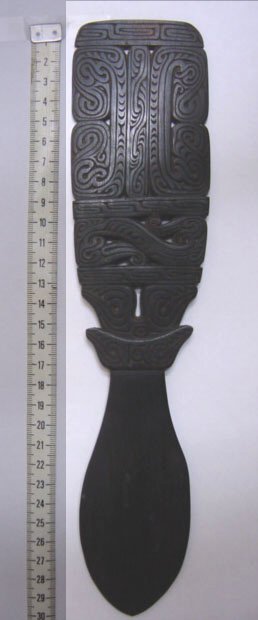
These examples provide some of the cautions necessary to consider in the conduct of taxonomic analysis. A classificatory schema has limited dimensions, is historically fixed and tends towards generalisations. Taxonomies also reflect a particular set of cultural meanings and understandings. To conduct a classification of an artefact is not the same as interpreting the culture. Artefacts are ‘notorious’ for slipping between cultural practices and even cultures - rapidly changing in their relationship and meaning to each (Baudrillard 1996; Buchli 1997). Utilising taxonomy to identify a cultural complex must be conducted with full awareness of the limits to the capabilities of this research approach.
With these considerations for what is meant by taxonomy it is also important to emphasise that this research is not a taxonomy of physical artefacts. The thesis implicitly acknowledges, however, that the Web search terms being studied and classified are nonetheless themselves artefacts.
Culture
Throughout this work there is constant reference to ‘contemporary culture’, cultural traits and cultures. The term and the concepts implied by this term are the basis for a variety of long term and ongoing debates. Williams (1983, 87) claims that “culture is one of the two of three most complicated words in the English language.” Geertz (1993, 11) offers eleven separate definitions of the term while actually utilising a further definition to frame his own essays. The debates regarding the meaning of ‘culture’ are often internecine and conducted across disciplinary boundaries (Pope 2002, 66). There is emphasis on this term in the social sciences, in particular, as a direct result of the perceived need for coherently conceptualising groups of associated humans and a reflection of the groups ‘seen’ by researchers. Arguably, the difference between anthropological and sociological interpretations and their respective understandings of the concept of culture is one of the major distinctions between the two disciplines (Johnson 2003, 12-13). Irrespective of this range of already available definitions and perhaps less readily acknowledged by other disciplines, is that material culture studies imbues the term ‘culture’ with additional meanings (Cruikshank 1992).
Culture is often paired with society as an essential combination, for example in the use of the term ‘socio-cultural’. In this work ‘culture’ is used in a conventional anthropological sense to describe the shared beliefs, behaviours and customs of a group of people or as Geertz (1993, 5) describes it, “man [sic] … is suspended in a web of significance he [sic] has spun himself [sic]. The group level of human interaction is the form of social and cultural activity that taxonomies are arguably most capable of revealing. There is also the implication - in formal definitions of culture - that individuals who interact together through particular artefacts and with common styles, such as a particular Web site, might be considered in the context of a sub-culture (Hebdige 1979, 18). That is, a group of people who share a more specific, more narrowly defined set of common belief, behaviours and customs that do not represent the entirety of each individual’s cultural understandings. Aunger’s (n.d.) contemporary exclusionary claim that culture is”the set of behavioural practices specific to a group” offers a definitional flexibility that can be applied irrespective of a group’s size but prevents a cultural group itself from encapsulating difference. The gathered research data - because of its foundation in the popularity of individual search terms - is a general representation of mainstream (Hammersley & Atkinson 1995, 256; Merriam 2002, 264) culture.
The less common material culture use of the term ‘culture’ intersects with this wider usage. The narrower archaeological concept of a ‘culture’ has been used to described the collection of artefacts that is generally believed to be representative of a distinct or identifiable group of people (Bahm 1992, 121). The archaeological ‘culture’ is most commonly used to identify prehistoric periods in Europe and North America. For example, the Acheulian culture of the lower Paleolithic period in Europe generally refers to the collection of artefacts that have been dated to a similar period rather than the specific set of cultural activities of a common group of people (Ashton & McNabb 1995). The subtle distinction in the archaeological definition between people and things reinforces the relationship that artefacts have to the cultures who manufacture and use them. For researchers of prehistoric periods the artefacts will stand as the primary form of available evidence. The reliance of the archaeologist upon artefacts can be contrasted with the direct observations of culture that is available to ethnographers.
A similar situation is presented to researchers with an interest in the cultural practices enacted through the Internet. The opportunity for direct - visual and physical - observation in the ethnographic sense is limited because the cultural practices themselves are part of a more expansive culture that is not solely conducted or experienced on the Internet. A curiosity of this culture is its geographically dispersed and indistinct nature (Galusky 2003, 195). Distanciation from others is not solely a consequence of the Internet itself, although it is one of its defining features, but of what is also sometimes described as ‘media culture’ (Kellner 1995). What is left for the researcher to examine are the traces of culture left in the form of, among other things, search terms. These have become, in many respects, the archaeological traces of contemporary ‘media culture’.
The identification and classification of the artefacts - and the desire for artefacts - found at an individual site reveals partial evidence for cultural practices enacted at a variety of locales. The aim of examining a particular site of cultural practice is not to represent a culture in its entirety but to constitute an understanding of the traits and qualities of that culture which are visible at that site. The subtlely required for this examination is made increasingly complex when a culture is revealed to be composed of smaller cultures while also being influenced by wider hegemonic and mainstream cultural and national influences. The observation and recording of cultural practice reveals the pluralistic nature of contemporary culture and the research process will inevitably represent the interests and qualities of smaller specific cultural groups (Hebdige 1979, 18). Contemporary culture is an expansive and dynamic construction that is, at best, imprecisely located and defined. The influences of media, high-speed communication, international trade and trans-national corporate structures contribute to the construction of indefinitely bound, geographically ambiguous and overlapping cultures. In this light identifying the combination of artefacts found at a single site or locale and discerning the dominant traits expressed by these artefacts offers the prospect for a more readily achievable task than the enormity of discerning and recording the ‘whole’ of contemporary culture (Lemonnier 1993, 12).
An ‘Official’ History
There is an ‘official’ history of the Internet. It is not determined by one particular person or through any set of agreements. Nonetheless, an official history does exist. The official history could be described as heroic in the sense that it is celebratory and focused on specific achievements and events (cf. Hoskins 1987; Castells 2000, 11). These highlights are pieced together with a form of continuity that pays little regard to the rationales for individual developments. A glue to this grand narrative is provided by references to the quantifiable and ‘phenomenal’ growth of services such as the Web, email and, increasingly, instant messaging (Cohn 2001). The official history is repeated often and the documents that celebrate this history have themselves become incorporated into subsequent recounting of the story (Leiner et al 2003). Leiner et al’s (2003) article is hyperlinked with the observation that it is produced “by those who made the history” (http://www.isoc.org/internet/history/)
This history - as with many histories - is about the winners who are victoriously cast against a background of morality tales that predict social and moral decay (e.g. Horin 2003). The invisible enemies portrayed by these stories provide a rationale for the heroes of this history. The dates and choice of events are appropriately somewhat arbitrary and more is left unspoken than is incorporated thus reflecting Baudrillard’s (2001) concern that contemporary culture engages with history through a succession of media-framed events. This section examines this received history as a means of understanding the current manner in which the Web is conceptualised, the way it is used and why the Web is understood through the various pervasive ‘virtual’/corporeal dichotomies (Miller & Slater 2000, 4).
This ‘official’ history also celebrates specific heroes who are held up as icons for the pioneering spirit of the Internet. These figures are represented singly and often without acknowledgement of the corporate backing or research teams that contributed to their work on these lionised projects. These representations promote the myth of the lone programmer working long hours for innumerable months to bring their vision for social betterment to fruition. It is a myth that is crafted, for example, by Microsoft and authors of popular literature to honour the more entrepreneurial of its two founders, Bill Gates (Wallace 1993, 18 & 37 & 270; www.microsoft.com/billgates/bio.asp 2003).
Other figures are prominent and more directly relevant to the history of the Internet than Bill Gates. A history - of sorts - can be recited in the form of a mutated linear family tree. Escobar (1995, 410) similarly observes that “studies of material culture and technology have suffered from dependence on what a reviewer of the field recently called ‘the standard view of technology’ (based on a decontextualised teleology that goes from simplest tools to complex machines).” Tim Berners-Lee created the Web and simplified the Internet allowing Marc Andreessen to create Netscape and created a graphical Internet (King, Grinter & Pickering 1997, 7). David Filo and Jerry Yang developed Yahoo and made it easy to find anything which enabled Jeff Bezos to begin Amazon.com and created Ecommerce making it easier for people to shop online (cf. Klatt 1996). Before this lineage there is no World Wide Web to celebrate or a user-friendly interface onto the Internet. More popularly oriented writings imply an almost genesis-like creation. Dertouzos begins the foreword for Berners-Lee’s own book about the Web with an unabashed homage, claiming the work to be “a unique story about a unique innovation by a unique inventor” (Berners-Lee 1999, ix). The foreword ends in a similarly celebratory manner, Berners-Lee “opens a rare window into the way a unique person invents and nurtures a unique approach that alters the course of humanity.” (Berners-Lee 1999, xi). The Web appears, in these writings, out of the almost primordial complexity of Unix-based operating systems, Department of Defense funded projects and university campuses as a fully-fledged, readily available global phenomenon. The sequence of development and improvement of computer hardware and software over the entire post-World War II period is conveniently discarded for a more appealing and immediate myth (Connolly 2000). Connolly’s history starts at 1945 jumps to the 1960s and on to 1980 with four entries. Despite the brevity of this history it provides a trivial link to the oldest existent Web page (www.w3.org/History/19921103-hypertext/hypertext/WWW/Link.html) suggesting a very particular understanding of history heavily oriented towards the influence of the W3 consortium – the host Web site for Connolly’s own Web page.
More sophisticated discussions of the history of the Internet acknowledge an origin in the 1960s as part of the prevailing United States Department of Defense’s Cold War paranoia. The ‘Cold War’ perspective provides a three-stage progression for the Internet’s development from a military project through an academic phase before an explosion of commercial interest (Connolly 2000). These phases parallel the specific development and popularisation of operating systems. Unix, one of the earliest ‘modern’ operating systems, and its derivatives still have a significant role ‘behind the scenes’ of the Internet. Popular and personal consumer preference saw Microsoft’s loosely derived and hurriedly purchased CPM clone, the Microsoft Disk Operating System (MS-DOS) become dominant in the personal computing environment (Cringely 1996, 133). Subsequently, the graphical user interfaces of Microsoft’s Windows products assisted in the popularisation and commercialisation of the Internet. These longer more expansive histories better reflect the scale of the development involved in delivering the ‘simple’ interface of the modern Web browser to millions of participants. The same histories, however, tend to shroud the origins of the Internet behind an impenetrable veil as a Department of Defense project and as the technology of an unfamiliar operating system - Unix.
The third contributing factor to the received history of the Internet is found in the writings of commentators such as Benedikt (1993), Rushkoff (1994), Barlow (1996), Stenger (1993) and Rheingold (1991). Despite the age of these works and the stage of Web development in which they were written, they are still influential documents heavily referenced by subsequent writers both negatively and positively. The philosophy that underlies these early works reflects a series of utopian and emancipatory ideals that these writers brought to the Internet from the background of 1960s popular culture and existentialist philosophy (Dellinger n.d.). These ideals were solidified initially around the Whole Earth project that evolved into the Whole Earth ’lectronic Link (The WELL). As one of the first web sites to self-referentially comment about itself, its purpose and the Web as a phenomenon it exerted a heavy influence on other early commentaries of the Internet and the World Wide Web (Rheingold 1994; Rushkoff 1994; Turkle 1997).
These writings present particular traits of a specific cultural group but offer them as part of a wider culture. They construct a heritage that harks back to the dream of a utopian and emancipatory Web. Winner (1986, 20) observes that such claims are regularly made for ‘new’ technology. “The factory system, automobile, telephone, radio, television, space program, and of course nuclear power have all at one time or another been described as democratizing, liberating forces.” (Winner 1986, 20). The most consistent claim of these writers with respect to the Web is that it will free ‘us’ from a wide variety of constraints that currently impinge upon ‘our’ daily freedoms, including the constraints of physical bodies (James & Carkeek 1997; Poster 1997; Turkle 1997). They imply, for example, that ‘we’ will be able to express ourselves freely online, that ‘we’ will be free from the influences of mass media, that ‘we’ will be our own publisher and media outlet, that ‘we’ will have all the information ‘we’ need immediately available to ‘us’ and that ‘we’ will become part of a global community. Escobar (1995, 411) criticises this representation of computing technology when he observes that these positions are “at best wishful thinking motivated by the seductiveness of virtual reality and like technologies and at worst misguided efforts at engineering social reality.” Despite the laudability of these sentiments, they are founded on little evidence beyond that derived from their author’s own unique experiences (Stallabrass 1995, Robins 2001; 14; Hine 2000, 17; Dellinger n.d.). Central to the description of these experiences was the WELL - a specific community with a stated manifesto and geographically convenient location in San Francisco, near Silicon Valley and the heart of 1960s flower power and anti-war campaigns. The WELL also reinforced its online community with face-to-face meetings in locations around San Francisco (Wilson 1997, 149). Participants of other communities who bemoan a perceived lack of association often ignore the additional face-to-face contact and interaction available to WELL members. As a particular set of traits and cultural perspectives specifically located within a single community these writings should not be interpreted as being representative of the wider perspectives and experiences of all Internet users.
The received, ‘official’ history of the Internet, particularly the Web, contribute heavily to its construction as ‘different’ and a binary opposite to the ‘reality’ experienced elsewhere (Stenger 1993; Rushkoff 1994; Turkle 1997; Wertheim1999; cf. Siering 1995; cf. Wellman 2001; cf. Tyler 2002). It presents an intertwined set of beliefs that have underpinned more recent, and particular commercially orientated examinations of the Internet (Wilde & Swatman 1999a; Spector 2000; Seger 2002). The first belief is of the individual genius of the creator (Wallace 1993; cf. Gilfillan 1970, 71). These people are presented as the heroes in the mythology of the Internet, without their specific invention being made available to the benefit of the Internet as a whole it would be experienced in a different form. The second belief is in the mysterious origins of the Internet. Partly because of the complexity of the combination of interrelated technologies that ‘make’ the Internet and partly because of the length of time the prerequisite technologies took to become consolidated as the Internet this history is more readily represented and understood as a creation myth (Allen 1999; Uimonen 2001; Mueller 2004). The final myth is of the broad and sweeping changes that this technology will engender upon contemporary cultures globally (Clark n.d.; Uimonen 2001; cf. Surman & Reilly 2003). The technological determinism inherent in these discussions is visible with the benefit of hindsight. It is a belief that is technologically biased and unreasonably places heavy emphasis on the positive effects of computer-mediated communication and interaction. Costigan (1999, xx) makes the observation of writings regarding the Internet that “much of what is written points to a personal perspective on the future of the Internet, based on how an individual thing will evolve. This is a history we are actively writing.”
In the light of this combination of myths and the significant impact that they still have upon popular imagination of the Internet it is unsurprising to see them consolidated into almost theological interpretations such as Wertheim’s (1999) The Pearly Gates of Cyberspace. The importance of this history is increasingly problematic. As there is an increasing normalisation and acceptance of Web-based cultural activities the emphasis of this received history on difference and emancipation is incongruous with the immediately observable situation. Histories such as Wertheim’s also tend to generalise by assuming that there is a single differentiated Web culture. Assuming that a single ‘Web culture’ exists ignores the diversity of experience that is represented on the Web while also assuming that it is both separate and distinct from contemporary culture (Miller & Slater 2000). A mono “Web culture” is a position that primarily benefits eCommerce rhetoric through its support for the claims that it rewrites the rules for commerce solely as a consequence of its ‘virtual’ provenance (Lubbe 2003, 34). In contrast, this thesis argues for the significance of Web-based exchange as an increasingly significant and indicative aspect of a contemporary western mainstream culture. It does not argue for the unique or distinct presence of a ‘Web culture’ nor does it argue that only one culture can be identified through a Web based research lens. The data collected for this research is only capable of revealing the presence of a heterogeneous mainstream culture and this is acknowledged as a key limitation of the current work. The subtleties, variations and differences that Miller & Slater (2000) can identify as the uniquely ‘Trini’ (Trinidadian) cultural presence online is not readily accessible to this work with the current research data. In this light, this thesis is a complement to the intentions and meanings of previous works such as those of Miller & Slater (2000).
Material Culture
The research focus of this thesis is not primarily historical but artefactual. It thus provides an alternative approach to that given by the ‘official’ histories of the Internet and necessitates a different approach that can provide a theoried reading of the contemporary environment. The perspectives developed within the framework of Material Culture Studies are used by this thesis to develop an understanding of the phenomena that occur within the culturally constructed locales of the Web. Material culture studies has a lengthy history that is primarily associated with collectors, archaeology and the modernist project for knowing. Buchli (2002, 5) argues that entire super-category ‘material culture’ was itself an intellectual invention that,
materializes something entirely new and uniquely Victorian and Western, as modern as the artefacts of industrialism on display at the Great Exposition of 1851 from which our more systematic nineteenth century collection of ethnographic material culture took their inspiration.
In the archaeological context artefacts are the primary evidence that tells archaeologists about past lifeways and traits. Kingery (1996, 2) observes that this is an uncertain task; “Archaeologists are the peer group for whom the object - its attributes, frequency, distribution, associations - is unfettered by textual evidence and for whom material culture interpretations are most difficult.”
Material culture as a source of anthropological evidence and a means to understanding cultures generally fell from favour with the rise of the ethnographic turn in anthropology and the emphasis on long term fieldwork initially inspired by Malinowski (Buchli 2002, 7). The new immersive paradigm placed emphasis on participant observation and the sustained presence of the researcher with the subjects of their research - specific cultural groups. (Hammersley & Atkinson 1995, 1)
However, material culture studies has also developed a critical response to this modernist worldview that presents a re-expanded role for artefacts and at the same time blurs the meaning of an artefact by widening its scope. Material culture studies are not artefact obsessed, artefact bound or reduced to the tallying of physical remains. Material culture studies has matured into a discipline that has a central imperative to interpret cultural practice.
This broad remit draws upon a wide-ranging collection of authors from many disciplines in the humanities and social sciences. The post-processual ‘turn’ in archaeology was also felt in material culture studies through the writings of Hodder (1989), Tilley (1989), Buchli (1997, 2002) and Shanks & Hodder (1997) who draw upon the writings of postmodernists, critical theorists and feminists - among others - to articulate a nuanced reading of the artefactual aspects of the world. More critically nuanced studies have introduced a tightly integrated understanding of artefacts in relation to the cultures that produce, consume and interpret them (Miller 1991). The critical turn in material culture studies also posits an understanding that the cultural consumption of an artefact is not necessarily bound to its production. Tilley (2002, 27) makes this observation in relation to discussions of gender in a Melanesian context when he observes that this “is a way of thinking about the relationship between producers and their products centring upon activity. It is this that produces meanings and serves to gender both persons and artefacts.” Consumption based perspectives also allows material culture studies to break from the predominantly US-based association of artefacts with archaeological provenance. Material culture is capable of examining any artefact in the broadest sense. Increasing distanciation from the ‘traditional’ archaeological context also enables the examination of artefacts to move beyond looking at only functional and tool based items. Ultimately the flexibility provided by critical interpretation disconnects the assumption that physical presence is the central quality for ‘artefactuality’ for defining the presence of absence of an artefact. Oldenziel (1996, 65) poses the question, “What is materiality in cyberspace?”, to which she answers with another question and the implied claim that “Is it not more or less what semioticians have proposed for some time - that things are not existent and meaningless unless a meaning has been ascribed to them through essentially linguistic processes?”
A range of works have developed this broader view of artefacts and their relationship to a culture. Miller & Slater’s (2000) The Internet: an ethnographic approach reflects many of the sentiments of this thesis with respect to its theorisation of material culture. Burke’s (1978) Connections reflects a similar, condensed and more mainstream understanding. Other research such as Michaels’ (1986) The Aboriginal Invention of Television in Central Australia, Schwartz Cowan’s (1995) “How the Refrigerator got its Hum” and Winner’s (1986) The Whale and the Reactor all reveal individual interpretations of particular cultural processes and practices that are not locked into a deterministic view of reality.
Prown (1996, 24) distinguishes two forms of material cultural researcher - ‘hard’ and ‘soft’ - based on where each perceives the source of reality. ‘Hard’ material culturalists see reality as lying within facts, the solidity of the artefact and its capacity to be scientifically measured. Realist worldviews contrast with the ‘soft’ material culturalists who see reality as a social construction. They see the world as an object of interpretation in which they (and every) interpreter plays an active role inscribing and ‘creating’ the artefact. These differing points of view are also described by Buchli (2002, 2), who sees the distinction as being between soft ‘British’ and hard ‘US’ material culture studies. These are not definitive classifications and each group ‘borrows’ and learns from the other. I closely align with the ‘soft’ material culture perspective as described by Prown and draw upon the post-processual movement in material culture studies that represents the most recent apogee of this intellectual perspective.
Tilley (2002a, 23) summarises the enormous scope of this project.
Things have thus become regarded as texts, structured sign systems whose relationship with each other and the social world is to be decoded. In various post-structural approaches to material forms the metaphors of language, or discourse, and text have remained dominant in an understanding of things. The new emphasis here has been on polysemy, biographical, historical and cultural shifts in meaning, the active role or ‘agency’ of things in constituting rather than reflecting social realities, power/knowledge relations and the poetics and politics of the process of interpretation itself, that we write things rather than somehow passively read off their meanings independently of our social and political location, values and interests.
What Tilley describes here is a subjective and expansive project that overlaps its concerns with a variety of disciplines and philosophies. Interdisciplinary has strengthened the material culture perspective while also fracturing its articulation as a disciplinary approach. Analysis and interpretation of material culture regularly appears in journals based in sociology, critical management, geography and almost any ‘social science’ oriented discipline.
Studies of the ‘Virtual’
As elements of the ‘virtual’ impact upon different aspects of everyday life and cultural activity it becomes increasingly less useful to focus research around general differences between the ‘virtual’ and ‘real’. Instead, a more specific mode of analysis is suggested that reconnects spaces of connected cultural activity. Culturally aware approaches de-emphasise technologically determined discussions of contemporary ‘virtual’ spaces in toto and advocate a relative approach in which research is conducted with observation in the ‘virtual’ rather than of the ‘virtual’.
In contemporary culture the ‘virtual’ has become synonymous with those social experiences enabled through the mediations of information technology (Thrift 1996, 1464). Popular emphasis upon the technology that enables navigation and access to the hegemonic and celebratory ‘virtual’, however, belies its thoroughly social foundations (Sheridan & Zeltzer 1997, 86). Uncritical fascination with technical capacity creates a coarse distinction between the qualities of an ill-defined virtuality and the equally uncertain parameters of experience within physical ‘reality’. The boundaries between these territories have, however, become blurred to the extent that the experience, expression and enactment of contemporary culture readily flows between these locales in what Nash (2000) describes in the context of the Irish diaspora as ‘circuits of culture’.
Technology-oriented presentations of the ‘virtual’ - in the contemporary guise of cyberspace, the Internet or the World Wide Web, have cast it as a panacea for the problems and experiences of reality (Graham 1997: 41; cf. Stoll 1996: 10-11). IBM and Microsoft promote their tools as the key to globe-spanning successful commerce. In a similar vein some educational technologists predict the demise of the lecture theatre (cf. Stoll, 1996: 146). Although these claims solidify the ‘virtual’ as a definable aspect of cultural practice and as a space for social experience they do little to clarify the assumed or perceived distinction between ‘virtual’ and ‘real’ life. At an immediate and sensory level the ‘virtual’ is present in disembodied contrast to the ‘reality’ of physical presence, however, precursors of this form of experience can be located with radio listening and television viewing (Green 1997, 59). Disembodiment is the distinctive quality of social experience conducted within a ‘virtual’ provenance. However, and of equal significance, the ‘virtual’ reflects and imitates the practices of ‘real life’ (Whittle 1997, 12).
Regarding the Internet as artefactual necessitates a critical and interpretative position regarding the artefact itself, both in cyberspace and in ‘real-life’. The immateriality of the Internet emphasises artefacts, including those with a ‘virtual’ provenance, as culturally significant for the manner in which collected combinations of shared, sometimes abstract and complex, meanings can be encapsulated and interpreted in a single phenomena distanciated from immediate human presence - a single thing (Shanks & Hodder 1997, 8). Artefactual research worldviews are distinct from “everything-as-text” oriented interpretations. Gottdiener (1995, 22) claims:
the issue is not the relationship between the everyday meanings and social practice, but of articulating a philosophy of consciousness independent of social context. Such a position, although challenging to philosophy and the sciences that depend on textual interpretation, has limited value in the analysis of material culture.
If the ‘virtual’ is briefly considered beyond the scope of solely technological definitions it is most consistently described as a social space without physicality. Thrift (1996, 1465) cites a range of conceptualisations of the ‘virtual’ that are all founded upon spatially orientated definitions. Lefebvre’s The Production of Space (1991) is the starting point for many of these definitions. Lefebvre argues (1991, 38-39) that social space cannot be directly equated with physical space. He also cautions against the fetishisation of space in itself (1991, 90). “Itself the outcome of past actions, social space is what permits fresh actions to occur, while suggesting others and prohibiting yet others... Social space implies a great diversity of knowledge” (Lefebvre 1991, 73). Wise (1997) reasserts the significance of Lefebvre’s triadic conceptualisation of space and the privilege of ‘representational space’ within other discussions of social space. Nuanced understandings of social space, Wise (1997, 78) claims, prevents the technological contributions to the formation of spatial practice from being disentangled, in a meaningful way, from the symbolic representations of that space. These interrelated mediatory influences prevent discussion of the ‘virtual’ from descending into technological determinist arguments.
Defining the ‘virtual’ within a critical framework should not discard the technology that mediates these cultural practices but neither should these approaches be driven by the mere presence of this, or any other, technology. Technology is intertwined with other cultural phenomenon and contributes to the particularity of the provenance in which these practices are found and shaped. The combined emphasis that has been placed upon technology should be assessed as a subjective claim that supports particular interest groups - and, it could be claimed, particular interested corporations (Bereano 1997, 27).
The immediate problem for conducting critical ‘virtual’ research is to deliver a position that acknowledges a ‘virtual’ provenance of experience without automatically affirming the simplistic observation that everything ‘virtual’ is not ‘real’. The social sciences have expended considerable effort tackling ontological issues regarding reality through works that have entered the sociological canon such as those of Berger and Luckmann (1966), Arbib and Hesse (1986) and Foucault (1983). These analyses suggest that the assignment of quantities of ‘reality’ to social phenomena is illusory nor can the ‘virtual’ be dismissed or disregarded solely because it lacks corporeality. “Space is social morphology: it is to lived experience what form itself is to the living organism, and just as intimately bound up with function and structure” (Lefebvre 1991, 94). The boundaries to experience in the ‘virtual’ are the consequence of the complexities of a specific provenance and not because the ‘virtual’ somehow lacks ‘reality’ - the ‘virtual’ is equally capable of producing cultural ‘truths’, meaning and engagement.
Seeking and finding ‘reality’ within the ‘virtual’ attenuates the differences between the space being observed from the space in which the researcher is observing. A similar situation is found in the ethnographer’s dilemma when they proceed among ‘other’ cultures (Atkinson 1990, 106). McBeath and Webb (1997, 258-259), however, argue for an emic perspective on cyberspace, “thus, this space has no meaning as this space, but rather has meaning for the cybernaut from its interior, an interior of which the cybernaut is part…”. However, placing primacy on the immediacy of experience in a single space potentially ignores the ways in which social experience and understanding of the social world is multi-locational. There is no ‘in’ in ‘virtual’ space that can be contrasted with being ‘in’ an offline space. Everyday life is simultaneously located in many spaces without specific qualification and it would be a similar methodological nonsense to disentangle the experience(s) of space(s) inside a car while parked in a shopping mall in a large city.
A variety of ‘net’ activities indicate that the experience of the ‘everyday’ continually reaffirms the ‘reality’ of the ‘virtual’. These experiences include the significant stages of life such as marriage ceremonies, malicious activities such as stalking and rape (www.acm.cps.msu.edu/~jangchyn/TC860_97/msg/23.htm, 1998; Silver 2000, 22) and various forms of consumption including ‘on-line’ shopping and gambling as well as conventional written and spoken communication. Experiences that cross between ‘virtual’ and physical space, by relating ‘sites’ of cultural engagement to one another, further stress that multiple provenances of experience combine to reconfirm the ‘reality’ of each space. An example of these intersections between ‘virtual’ experience and physical consequence is the case of the cyberstalking of Jayne Hitchcock (members.tripod.com/~cyberstalked/story.html, 1998). During a two-year period the stalker used her name in fake ads for adult services, sent unwanted mail order goods and fake letters of resignation to her employers. The significance of these incidents is the manner in which the specific qualities of multiple provenances of cultural practice (Geertz 1993, 22; Marcus 1995) have been used to maximise the impact on each victim.
Technology is ever present in this discussion as the transitional interface between physical and ‘virtual’ spaces. Information technology through constant implicit presence and its observational absence, assists in affirming the ‘reality’ of the ‘virtual’. However, experience of the ‘virtual’ does not directly equate with the experience of any specific technology, software or hardware although this does impart distinct qualities onto that particular “representation of space” (Lefebvre 1991, 38).
The difficulty of conducting research in the ‘virtual’ is the authority associate with the binarism that determines the provenance of experience as being either within corporeal or ‘virtual’ ‘realities’. The scale and diversity of ‘virtual’ experiences and their impact upon social relations makes this representation difficult to justify. Everyday life’s presence in virtual environments and the presence of the ‘virtual’ within urban space make clear distinctions impossible (Graham 1997, 41-43; Thrift 1996, 1467; Ostwald 1997). Oz (1994, 12) takes this position further still by claiming that, “cyberspace is any environment in which information exists or flows”. As the ‘virtual’ increasingly fractures the ‘real’ so too the ‘virtual’ is itself increasingly fractured and ‘discovered’ as an aspect of the ‘real’ (Balkin 2003). The fracturing of the certainty of ‘reality’ is not, however, the direct result of any specific technical advance or invention. The continual bifurcation of the ‘virtual’ reflects its adoption and adaptation to extend, complement and, in some cases, replace other spaces of cultural activity. For example, tertiary education adds virtual space to the existing complement of learning spaces while business organisations seek virtual real estate to support their interests (e.g. www.beef.com). As ‘virtual’ spaces are utilised in increasingly diverse ways its significance within critical inquiry can be seen as (yet) another location for the comparison of connected cultural activities and interpretation. Identifying distinct activities that exclusively occupy a ‘virtual’ provenance, for example “Peer-2-Peer” file sharing, is a less fertile, although still valid, comparison that ignores Lefebvre’s entreaties against the fetishisation of space in itself.
The focus on non-spatial aspects of the ‘virtual’ may be in the short-term an inevitable methodology that immutably binds analysis to particular technological artefacts. The abundance of articles that discuss web pages and web sites as the meaningful level of study indicates the appeal for this form of analysis (e.g. Rich 1998; Sclafane 1998; Cronin 1998; Smith 1998). Investigation of specific Web pages disentangles one object from its wider series of cultural and social relations, including other web pages, for which it is presumed to be a meaningful representative. In effect, the analysis of a particular artefact as an isolated object tends towards the effacement of its relationship to the experiences of everyday life and contextualises it as an artefact of technology (Wakeford 2000, 35). One example of the obliteration of everyday life from examination of the Web is the insistence on “top down” consideration of Web sites that ignore search engines, bookmarks and even human memory. The object of seemingly neutral technology is then privileged with the ‘voice’ and hegemonic power of information technology and the status of data. As a consequence the cultural meanings that remain to be interpreted from this object are mediated through the wider “meta” meanings attached to the technology that created it rather than the contextualised mediation of everyday use and experience. While examination of individual objects, such as web pages, is an important avenue for analysis it should not become the focus of all analysis of artefacts or actions found in a ‘virtual’ provenance. Such an approach would necessitate every discussion of the telephone to be prefaced with a discussion of telephony and media studies would be required to speculate on the qualities and nature of the cathode ray tube and radio frequency (RF) propagation.
The Immaterial Object
Materiality is one of the qualities particularly ascribed to the artefact, and is sometimes insisted upon as the most significant quality of an artefact (Miller 1994, 3; Buchli 1997, 189). Conflating of the artefact to a particular set of physical qualities can be questioned in the light of a usable and accessible cyberspace that extends beyond the capabilities of unmediated, immediate and personal exchange. The ‘virtual’ artefact also breaks down the apparent logic for the binarism and separation of symbolism and materiality (Buchli 1997, 186). Seeing the artefact as an artefact allows the textual position to be discarded for an understanding in which the artefact is placed in a direct relationship to human agency (Thomas 1997, 211). This thesis extends this proposition a full circle to consider the “text as artefact”. In contrast to this position, insistence upon the need for a confirmed and personally affirmed physical reality leads, potentially, to the argument that for example an artefact must be visible (Criado 1997, 198), or touched, to be interpreted. What is being touched, however, is a particular set of qualities associated with the artefact which is, in turn, bound to wider systems of meaning and power in various, and sometimes fleeting, ways (Richardson 1989, 186; Hirschman 1996, 168). Culture through its sharing of meanings mediates the experience of the physical object. Automatically conflating visible material qualities with a particular meaning (Buchli 1997, 191) is a position implied in some forms of museology. The construction of cyberspace, and more mundanely the Web, reveals that the sense of the artefact and its spatial relationships are among the other significant qualities that can be interpreted from an artefact.
The presence of cyberspace as a space of contemporary culture emphasises, even stresses, the importance for gaining a ‘sense’ of an artefact rather than a particular experience of its apparently stable physical reality. This sense of artefacts - what could be described as artefactuality - differentiates the experience of cyberspace from that of a printed text or electronic media and many definitions that indiscriminately blur all virtual experiences as undistinguished totality. Similarly, a ‘real-life’ provenance imbues artefacts with an a priori ‘reality’ - an admittedly complex quality that includes qualities such as texture, volume and visibility. Artefactuality however is a quality of cyberspace and other social spaces that contribute to the construction of a subject’s experienced world. Artefactuality is not unique to cyberspace. However, the artefactual qualities that are emphasised within this space and the way they are distinguished from other social spaces emphasizes the importance of gaining a ‘sense’ of the artefact. Artefactuality does not necessarily impart coherent meaning but, rather, a polysemic, and potentially contradictory, range of meanings formed through the impact and relationship of other spaces, other artefacts and other cultural meanings (Hirschman 1996, 167). This complexity ensures that there is never, and can never be, a ‘raw’ articulation or clean sense of meaning (Riceour 1981) but rather a conceptual and experiential cloud filled with related tendencies, possibilities and oppositions. As an extension to this perspective, artefacts, the desire for them and the sense of an artefact found in cyberspace do not necessarily require direct reference to similar artefacts that are defined in a solely material way. Reference of a virtual object to a real analogy is increasingly less necessary with the introduction of the Internet in the dominant cultures of post-industrial societies (Touraine 1974, 116). Difficulty arises for the immaterial artefact when meaningful artefactuality that can be culturally understood is absent. As Hirschman (1996, 163) suggests, in echoing Gadamer (1989, 242-54), without a fusion of horizons there can be no communication between parties. For the user and interpreter of artefacts who is fully immersed in the spaces of the Internet the lack of materiality is irrelevant as the artefacts and the sense of, and desire for, these artefacts are integral to their current location. The contradictions between material and non-material artefacts are a consequence of the conflict between the social spaces of the Internet and those of ‘real-life’ that continuously interrelate and intersect. Driven initially, and at particular level, by the visions of artefactuality contained in the science fiction of William Gibson, the libertarian politics of Barlow and currently by technocratic visions of the Internet cyberspace is increasingly filled with artefacts and artefactuality.
Archaeologists infer the presence of absent artefacts from surrounding objects, and spatial relationships. The conventional archaeological record, too, only returns a selection of objects through the combined consequences of time and provenance and as a reflection of the relationships of social power in that and subsequent periods of time (Pearson 1997). Web-based artifacts and activity provide a denser strata but it is still one that can only be partially representative of the prevailing social and cultural relations found “online”. The online journal Slate summarises the representational nature of the Internet by claiming that “to archive the Internet with absolute fidelity would require cloning not only every computer on the Internet, but also every person using every computer” (Barnes 1997, 2). Baudrillard’s (1994, 1-2) more general observations regarding simulation extends this point.
The territory no longer precedes the map, nor does it survive it. It is nevertheless the map that precedes the territory...today it is the territory whose shreds slowly rot across the extent of the map...But it is no longer a question of either maps or territories. Something has disappeared, the sovereign difference, between one and the other, that constituted the charm of abstraction.
The Synthetic Artefact
Attempting to identify an artefact on an interpretative plain within the shifting versions of ‘reality’ and in relation to the contemporary culture is a fraught task. I initially utilise the term, ‘artefact’, in the conventionally received sense as ‘the product of human action’ (Richardson 1974, 4-5). However, what requires re-examination in light of the significance of the Web are the acts and actions that are understood to produce the artefact. In terms of the Web, what is of particular interest for an excavation of culture from available digital stratigraphy are the acts of ascription that ‘make’ an artefact. More widely it is the inter-relationship of artefacts and humans within particular environmental contexts that contribute to one another’s definition. It is in the constant re-configuration and shifting inter-relationships between people and artefacts – what is described elsewhere as culture – that produces a sense of the artefact: artefactuality. The artefact has an intimate connection with the cultural. The indefinite, problematic and variously defined culture assumes a particular ‘reality’ when it is perceived through artefacts (Soja 1989, 79). Seeking the ‘product of human action’ on the Web necessitates discarding the desire for an artefact to hold physical qualities in favour of understanding the artefact as the result of particular intersecting cultural relationships. Taking the definition of an artefact further, an artefact is an artefact because humans define them in that manner. Artefacts are ultimately tied to shifting frameworks of culturally constructed meanings and interpretations (Hides 1997, 11).
Artefacts orbit within varying relationships of intensity to the constantly dynamic cycles of social and cultural interpretation and misinterpretation. The artefacts I found during the period of my data gathering are viewed as being grounded in a contemporary relationship with the socio-cultural and their role in the construction and contestation of all forms of power. Taking this framework of interpretation shifts methodological emphasis from those classificatory schemes primarily orientated around utility or style (Baudrillard 1996, 4). Artefactuality, as the collection of an artefact’s qualities, operates as a single unified signifier for an arrangement of social relationships (Miller 1991, 13). Given the name of the approach physical qualities are generally seen as the most significant aspect in the interpretation of material culture. Most significantly, archaeology deals initially with the physical qualities of the artefact in order to proceed to an interpretation of the social and cultural conditions in which the artefact was originally ascribed meanings (Tilley 1989, 191; Buchli 1997, 189). Material culture’s systematic practice is described as a process of scientific enquiry in recognition of archaeology’s concern for the materiality, and reality, of artefacts. Archaeology, in its defence, generally has little access to the qualities of artefacts beyond the physically observable (Tilley 1989, 192). Archaeological understanding of specific artefacts is developed from a series of assertions and comparisons built out of knowledges surrounding the artefact’s provenance and previous interpretations of similar artefacts. It is the ability to associate ‘like’ with ‘like’ that provides the opportunity to meaningfully construct and compare taxonomic classifications of artefacts.
Artefacts are products of human manufacture which have a persistence beyond and outside individual subjectivity and are not bound to a specific subject’s immediate experience (Richardson 1974, 4). Artefacts have ‘fixed’ qualities that allow at least minimal interpretation over extended periods of time irrespective of spatial separation or its alienation from their creator. Miller (1991, 61-2) by drawing upon Munn identifies the persistence of meaning over significant spatial difference with the canoes of the Kula.
What is being portrayed here is a concern with the creation of an object in which social relations are implicated, but which will ultimately be delivered up for the use of other people, by being launched into the Kula Ring. This is an example of the problem of alienation: certain conditions serve to separate the creators from the object of their creative processes.
It is worth considering the extreme positions in these discussions of the artefact. For the realist, the artefact is ‘there’ telling ‘us’ about the cultural lifepaths of ‘others’ (Hides 1997, 13). A postmodern position, in contrast, suggests that the artefact tells ‘us’ about ‘ourselves’ as ‘our’ interpretation of the artefact is an act of autobiography revealed by our imparting of particular meanings on to its ‘presence’ (Baudrillard 1996, 105; Buchli 1997). The distinction between the interpretations of the anthropologist from the generally more casual observations of the non-anthropologist can be contrasted in a similar manner. To extrapolate cultural lifepaths from an artefact requires a range of knowledges that are not automatically inferrable from the examination of an artefact’s observable qualities. To achieve this form of artefactual interpretation requires the privilege, legitimacy and, probably, training of an anthropologist and the theoretical perspective of the ‘realist’. In contrast, interpreting the artefact as an act of autobiography, in relation to one’s own subjectivity, imitates more anticipated everyday processes of interpretation, ascription and meaning-making in relation to an artefact – a more nuanced postmodern attitude. The artefact can be considered by its various qualities, such as utility, aesthetic appeal, the social status it imparts, its value or comparative rarity in relation to the social experiences and motivations of those who engage with it (Buchli 1997, 190). Emphasising this series of qualities that can be indentifiied in an artefact reflects its provenance (Miller 1991, 104).
The artefact is a culturally meaning-laden ‘thing’. However, discussion of the artefact inevitably conflates it with its physical qualities as an apparently coherent, necessary and synonymous relationship (Miller 1991, 31). A physical ‘thing’ that is ‘meaningful’ is always an artefact (cf. Shanks & Hodder 1997, 17). However, discussions that commence with a series of artefactual meanings and qualities do not necessarily bind to any particular material form.
The anthropological treatment of the artefact, following the methods of archaeology, has often pre-supposed an inherent or knowable reality in its use and interpretation of artefacts (Gellner 1997, 48). In contrast, the postmodern turn in anthropology questions the solidity or certainty of reality by citing the necessarily mediatory, interpretative and subjective role of the anthropologist (cf. Shanks & Hodder 1997, 5; Buchli 1997, 2002). This ‘turn’ however has generally not articulated any ‘way forward’ for the treatment of the artefacts in social environments which sustain a plurality of meanings, interlocking webs of power and, the widening ‘globalised’ distanciation of ‘manufacture’ from consequent interpretation (Gottdiener 1995, 65) .
While meaning is generally perceived to shift around the anchorage of an artefact’s physical qualities, its qualities provide different forms of meaning-stabilising anchorages (Miller 1991, 116; Miller and Slater 2000). However, none of these anchorage points are individually stable entities; they are all, along with the artefact itself, a product of shifting social forces (cf. Miller 1991, 126-7). For example, the anchorage of style – in all its indefiniteness - is an important quality for many forms of artefacts (Lemmonier 1993, 11). The continually changing form of domestic motor vehicles is tied to a range of qualities including prestige, style, economic imperatives and consequently petrol consumption and engine size.
The tendency to anchor the artefact to physical qualities emphasises original manufacture as the point when a particular set of meanings are conceived (Miller 1991, 3). However, some qualities of the artefact must precede physical ones to enable its actual manufacture. Tools that aid manual labour are one example of the implicit need for ‘preceding’ qualities and the inter-relationship of artefacts with one another. The very specific utility of woodworking tools, such as planes, shapers and chisels reveals how particular artefacts do not simply develop without some recognition of future provenance, desire or need for the physical qualities of the artefact. In these tools, qualities, such as utility and the relationship to the material that will be worked, are qualities of the final manufactured artefact that are as significant as its final physical form. While there is a need for pre-existing artefacts to craft the indefinite but necessary environment for new artefacts to come into existence, after manufacture of an artefact, the relationship of physical qualities to an ‘intended’ meaning may hold only fleeting association that does not persist through space or time. The further the object is separated from its time and place of original manufacture the wider the range of potential meanings that will have become ascribed to it. Distance, acquired through temporal or spatial separation, is the most effective means of increasing the polysemous qualities of the artefact (Shanks & Hodder 1997, 9).
The increased fluidity that brings together combinations of an artefact’s qualities to define its presence can be seen as a hallmark of post-industrial culture (Smart 1992, 52 & 143; Touraine 1974). An example of the cultural particularity of an artefact’s qualities can be found in the formulation of ‘laws’. Laws are a series of abstract and immaterial internetworked concepts within European cultures. Within parts of Japanese culture, laws possess distinct colours (pers comms Keith Fletcher, September 2003). The fascination and primacy of the physical within European cultures makes this understanding appear unusual as the colour of an artefact is generally considered to be a physical quality. Having ‘colourful’ laws, in turn, raises the possibility that the Japanese consider their laws as artefacts rather than ‘simply’ as texts. The Japanese example of a different cultural practice also raises the question of whether the presence of one artefactual quality is sufficient to develop the sense and sensation of an artefact. Conjoined to this consideration is also the need to assess to what extent the possession of colour is a necessary quality of artefacts in Japanese culture (cf. Baudrillard 1996, 30-6; Ashkenazi & Clammer 2000). However, Shanks and Hodder’s observation regarding taxonomy-making should be treated as a cautionary remark regarding the theorisation and generalisations that are inherent in discussing artefacts.
Taxa are characterised by relative homogeneity. This is a legitimate strategy for coping with the immense empirical variety and particularity that archaeologists have to deal with. However, we should be clear that classification does not give the general picture; it gives the average (1997,9).
The possibilities for an artefactual but post-material space such as the Web problematises the assumption that artefacts are constituted within a ‘real’ and knowable world. The relationship between the ideational and physical within contemporary culture is a highly negotiated position. Baudrillard (1994, 19) takes this ‘negotiation’ to an extreme with his claim that,
The impossibility of rediscovering an absolute level of the real is of the same order as the impossibility of staging illusion. Illusion is no longer possible, because the real is no longer possible.
Baudrillard’s theorisation of the ‘real’ and illusion enable their negotiation to be considered in the post-material context - and by implication the ‘virtual’ – effectively rendering the physical an unnecessary or at least optional artefactual quality. Another example, which also suggests that artefacts are not the consequence of a fixed or measured amount of any series of particular qualities comes, perhaps ironically, from archaeology. The material extracted from archaeological ‘digs’ again become artefactual through the ascriptions offered of them by archaeologists seeing through great cultural and temporal distance (Hodder 1989, 67). The interpreted artefacts of archaeology possess a complex provenance. A complexity that is revealed by the range of claims that can be proposed regarding their origins and purpose. The debatable nature of meaning for any given artefact, offered by this theoretical perspective, also reveals the difference between the claims of realists and those who emphasise the ideational aspects of the social and cultural activity (Lemonnier 1993).
These distinctions and assertions approach their greatest density within a museum. However, the museum, as an artefact that is a consequence of a series of socio-cultural conditions literally ‘set in concrete’, imparts a coherence and logic on to the encased artefacts for a presumed audience. The museum presents an environment of tightly bound and inter-related artefactual meanings that reflect and reproduce systems of power and authority. Bourdieu (1986, 273) even describes the museum as a ‘consecrated building’. The artefacts found within this privileged space become part of a series of contemporary power relationships that substitute, and have little connection to, the socio-cultural power structures of their original provenance. Museums that adopt a diorama approach to the presentation of their holdings (the increasingly preferred method) fix particular sets of cultural and social meaning to their artefacts that reflect the ‘solidity’ of the artefact that is the museum itself. Dioramas frame artefacts within colonial visions of symbolic power while defining an ‘other’ culture. The style of Ripley’s Believe it or Not ‘museums’ take the privileges imparted by the space of the museum and the emphasis on physical qualities to its extreme expression within the framework of popular entertainment. The museum presents wax replicas of oddities with varying levels of veracity for the amusement of an audience. The privilege of a museum is reinforced through authoritative signs including dates, exhibition halls and a structured pathway through the exhibits. The claims made in this space rely solely upon the privilege of Ripley’s ‘being’ a museum. Once this illusion is shattered so too are meaning of the artefacts it contains. Traditional display methods in museums that visually present taxonomies of ‘like’ artefacts also fix cultural meanings and reinforce mainstream and hegemonic perspectives regarding the cultures under glass and under examination. The meanings ascribed to the displayed artefacts are products of the same culture as the museum itself (Baudrillard 1996, 98; Hooper-Greenhill 1992, 214-5). Taxonomic approaches, while offering less entertainment ‘value’, could be claimed as the more ‘ethical’ of the two approaches in its isolated representation of artefacts and its less focused attention upon crafting contextualised meanings.
Artefactual qualities evoke particular understandings of the culture they exist in. The artefact can never be, in itself, a fully articulated system. An artefact may be understood by the presence or absence of certain qualities, however, it can only approach full articulation by being considered in situ and in relation to the other artefacts of that space (Miller 1991, 109-11; Shanks & Hodder 1997, 11). The contextual environment constructs an expectation for the artefact and, in turn, the artefact crafts an expectation for the space. This reciprocal expectation of place and thing presents the extended implication that a close association is present between specific artefacts and particular meanings. This is found with many artefacts, but particularly those that have the most “matter-of-fact” or assumed intensity of interpretation applied to them. These are the artefacts of the mundane and everyday life. The forms of bureaucracy - literally, the utensils of the kitchen and the tools of literacy, as a sampler series of examples, are all artefacts that are expected to exhibit certain qualities or applications - a ‘normality’. Maintaining the notion that artefacts are the influence that produce cultural normality shares an intellectual kinship with Bourdieu’s (1986, 372-5) notion of the habitus and flexible structuralism (Miller 1991, 103). The expectation and even desire for normality provides a key anchorage around the meaning of an artefact in this association with a particular quality or set of qualities. Institutions associated with bureaucracy imply consequent action with the accurate completion of forms (as artefacts) and the power that can be exerted through these artefacts. In many respects there is a single rationale for bureaucratic forms that is found with the articulation of politicial, social and cultural power that they represent. The normalcy of the ‘form’ artefact is a powerful cultural construction that is bound by its artefactual qualities to a specific environmental context. The difficulty in imagining the bureaucratic form as anything other than a paper form – with the consequent possibilities for misinterpretation or alternative use - is a reflection of the power in the relationship perceived to exists between the subject and the artefact.
In complex systems of inter-related artefacts power relations can also be reinforced by the production of transgressive and recuperated artefacts that appear to work in opposition to dominant social relations. In a mechanical sense, transgressive and recuperated artefacts are produced when they possess qualities as an artefact that differ from those implied by environmental knowledge and are incongruous with the normality of other artefacts that are juxtaposed with the transgressive artefact. To varying degrees this creates ‘strangeness’ and asemiosis. However, knowledge and application of this conceptual opposition has become a marketing technique to attract mainstream attention in a media-obsessed and media-saturated culture. Social power can be obtained and lost through the manipulation of the relationship between artefacts, artefactual qualities themselves and the social relationships that are bound up with individual artefacts.
Power is related to the extent, range and forms of interpretation that are applied to the artefact (Gottdiener 1995, 68). Artefacts that are representative of absolute political power, in forms such as totalitarianism, occupy a smaller interpretative plain and possess different artefactual qualities than more mundane items. Artefacts, for example, such as the British Crown Jewels and monumental architecture provide less opportunity for interpretation. The difficulty in offering a ‘misinterpretation’ for these artefacts of absolute political power defines any misinterpretation as an act of resistance to the present regime. An observation that offers at least a tentative explanation for the popularity of British humour in many Commonwealth countries while remaining unfathomable among many US audiences. Aunger (n.d., 00724.008) observes that “not all social messages are equally attended to or adopted by their receivers. In effect, selection among messages occurs.” The questioning of political authority, similarly, increases the intensity of interpretations that can be applied to these artefacts. The variation and density of interpretations are inversely related to the power that they represent and reproduce (Baudrillard 1996, 56).
‘Everyday’ artefacts are also positioned within power structures. The paucity in the range of interpretations that are available is a consequence of their persistence within the mundane. Their interpretation is similarly a consequence of the particular power relations that act upon the artefact. Our belief that there is a limited range of interpretations that can be applied to a fork is closely related to the extent that the fork is bound - through its mundaneness - into a dense system of artefactual relationships. In the example of the fork, it is bound into a range of other apparently mundane items with such intensity that it is hard to conceptualise the fork without the supporting understanding of the artefactual qualities brought by a knife. Such a stable micro-system of artefacts frames and supports larger networks and wider parameters of power including, for example, the British understanding of dinner time etiquette.
Obversely, just as cultural relations can bind and restrict the interpretations of an artefact, cultural interpretations limit the artefact. The conflation of physical qualities of the fork with the artefact of fork restricts which artefacts can possess an artefactuality of ‘forkness’. The notion of ‘fork’ imposes limits on the artefact of the ‘fork’ through received understanding of this individual artefact’s presumed qualities. Limitations introduced onto an artefact through its artefactual qualities are shifting and changing ‘borders’ shaped by social and cultural forces (Miller 1991, 116). The artefact is temporarily restricted by these shifting boundaries of meaning but in continually different ways. These limitations are not inherent in the artefact itself but appear through the mediation of contemporary social and cultural relations and the manner by which artefacts are perceived. Tilley (1989, 191) says, “an object, any object, has no ultimate or unitary meaning that can be held to exhaust it.”
The example of the fork reinforces the deceptiveness of understanding an artefact primarily through its physical qualities. The fork’s functional simplicity, as a fork, is a manufactured simplicity and reflects the lengthy heritage that has contributed to the current physical forms of the artefact. None of this heritage can be understood or seen through direct, uncritical or untheoried observation.
Defining the artefact as a cultural product which is an amalgam of various qualities provides the opportunity for an increasingly reflexive ‘material culture studies’. The cautionary aspect of these claims is that the ‘virtual’ artefact is very much a product of its time. Without the influence of debates about cyberspace the suggestion that the immaterial can equally be considered artefactual would be seen as esoteric or eccentric. The insistence for artefacts to possess physical qualities is also a culturally specific one perpetuated in ‘colonial’ disciplines such as anthropology. Adopting the argument that artefacts are those things that are experienced as single meaningful phenomena that exist beyond one’s own self provides for a wider ranging, contemporary and more workable, understanding of material culture. Arguably this dilutes Material Culture Studies focus upon the more physical “Stuff and Goods” (Shanks, metamedia.stanford.edu/~mshanks/weblog/?p=217). Making an argument for the broadest definition of artefacts blurs the distinction, if any exists, between ‘reality’ and ideational phenomena while simultaneously crafting a more phenomenologically inspired distinction between the self and “everything else”. Hodder’s (1989, 66) observation that: “... some artists are convinced that the only truth left is to reach beyond image to find reality, while at the same time accepting that reality is itself only an image” indicates some of the complexity that is continuously negotiated between these philosophically dichotomous states. Taking a position that critically scrutinises all phenomena external to the observer without the certainty of any quantifiable truth also feeds upon critical threads of post-structuralist and postmodern thinking in the last four decades.